
Being Othered vs. the Power of Friendship
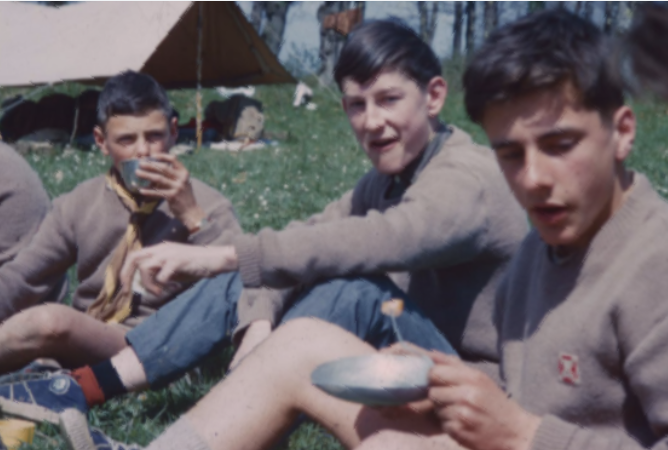
In the summer of 1953, a group of boys around 11 years old arrived at a summer camp in Middle Grove, New York. They settled in and made friends. They had no idea the counselors weren’t really counselors.
The staff were psychologists, and they were running an experiment with one goal: to see if they could get these boys to turn on each other.
After the boys had a few days to bond, the researchers split them into two teams and deliberately separated friends. They set up competitions and offered a prize sure to get 11-year-olds fired up: knives. When that wasn’t enough, the staff tore down a team’s tent and trampled their belongings into the ground, hoping each side would blame the other.
It didn’t work.
The boys started to suspect something was off. A rumor spread that the camp was really an experiment to make them fight. Then one boy found a staff notebook full of notes on how each group was reacting. The boys wouldn’t play along, and the experiment was called off as a failure. For decades it was barely mentioned.
The next summer, the same lead researcher tried again at Robbers Cave State Park in Oklahoma. This time he changed one big thing. The two teams were kept apart from the very first day, so they never had a chance to become friends.
This time it worked. The boys ransacked cabins, burned each other’s flags and got into fistfights. That’s the version that made it into psychology textbooks, often taught as proof of how quickly groups turn on each other.
But that isn’t the whole story. Decades later, a researcher who went through the original archives found that the adults had helped fuel the conflict. Staff stirred things up, and when the boys were aggressive, no one stepped in. The boys took that silence as permission. Meanwhile, the camp where the boys refused to fight was left out of the lesson almost entirely.
There’s one more part that rarely gets told. Near the end of Robbers Cave, the researchers gave the two groups problems they could only solve together, like fixing the camp’s broken water supply. Working side by side, the hostility began to fade.
We tend to remember the version where hate wins. The full story has more to teach us.
The boys at Middle Grove had two things the Robbers Cave boys didn’t. They got to know each other before anyone told them they were enemies, and they noticed who was pulling the strings.
There’s a word for what the researchers were trying to create: othering. It happens when we start to see a person or group as fundamentally different from us, as outsiders who don’t belong, and then treat them that way. It’s at the root of a lot of bullying, exclusion and conflict, for kids and adults alike.
The same two things the Middle Grove boys had can help protect kids from being othered and from othering someone else.
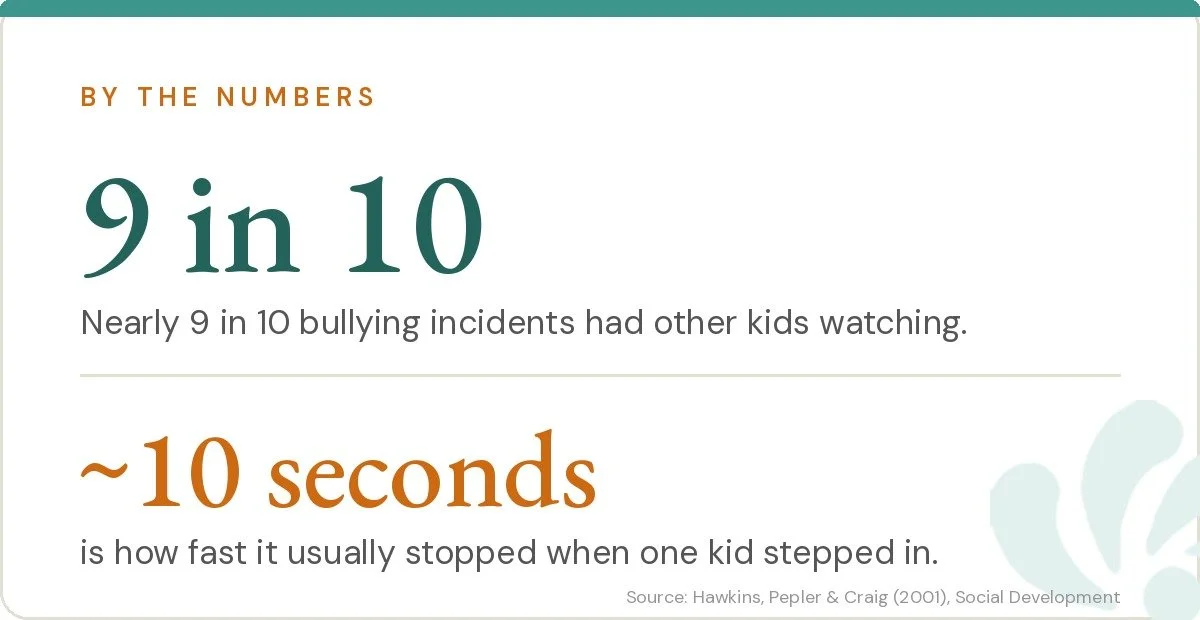
Look at any school hallway. Bullying rarely happens in private. When researchers recorded kids at recess, they found other students were watching in nearly 9 out of 10 bullying incidents. Most of the time those kids just watched. But when one of them stepped in, the bullying usually stopped within about 10 seconds. A bully needs an audience, and without one there’s usually not much left.
The pattern doesn’t stay on the playground. Adults get sorted into teams, handed a prize and told the other side is the problem. It happens at work, online and in politics, and when it goes far enough, it ends in violence and war. Every time, the people being turned against each other have more in common than not. The question the Middle Grove boys asked still applies: who benefits while we’re busy fighting?
So what can we teach the kids in our lives?
Let them get to know each other first. A review of more than 500 studies found that spending real time with people who are different from us usually reduces prejudice. Mix up the lunch tables, the group projects and the friend groups.
Give them shared goals. Like the boys fixing the water supply, kids who work toward something together stop seeing each other as the other team. Group projects, service activities and family challenges all count.
Teach them to look for the notebook. When someone pushes them to turn on a classmate, a group or a whole community, help them stop and ask why, and who gains from it.
Teach them they have more power than they think. A simple “knock it off,” walking over to stand with the kid being targeted, or getting a trusted adult all count, and it’s easier with a friend.
Watch what we model. Kids are always watching the adults around them. When grown-ups stay silent or shrug off cruelty as “kids being kids,” kids take that silence as permission, just like the boys at Robbers Cave.
The Middle Grove boys didn’t have a lesson plan. They had friendships and a hunch, and that was enough to ruin an experiment designed to make them enemies. Imagine what kids could do if we gave them both on purpose.
Educators: want help building empathy and inclusion into your classroom? Explore our trainings at eyesopeniowa.org/training-events.
Sources: Gina Perry, The Lost Boys: Inside Muzafer Sherif’s Robbers Cave Experiment (2018); Nature review of The Lost Boys (2018); The Psychologist, British Psychological Society; CBC Radio; Sherif et al., Intergroup Conflict and Cooperation: The Robbers Cave Experiment (1961); Hawkins, Pepler & Craig (2001), Social Development; Pettigrew & Tropp (2006), Journal of Personality and Social Psychology.