
Health

New Fact Sheet: What Iowa Teens Are Telling Us

New Fact Sheet: What Iowa Teens Are Telling Us 

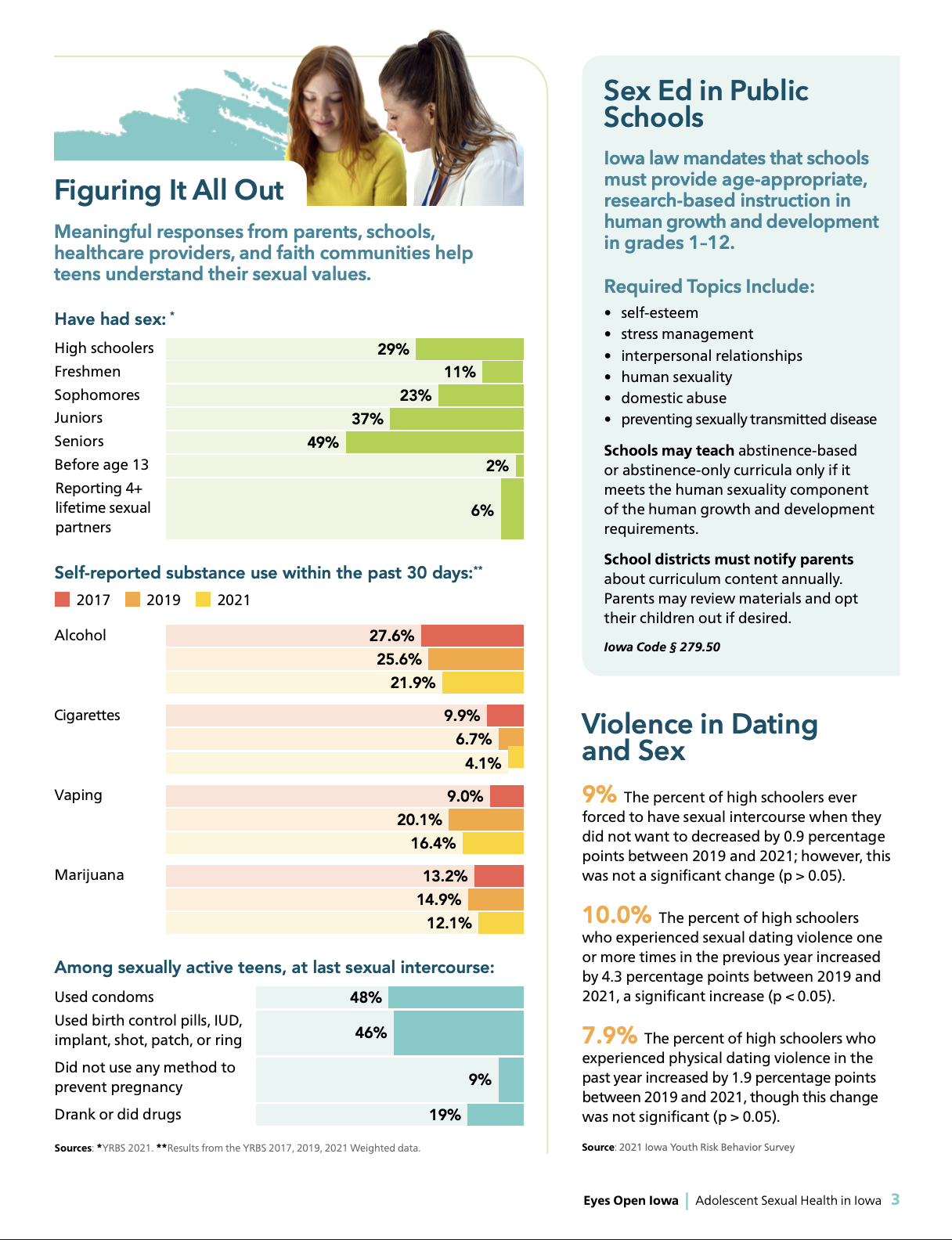
Remember those kids watching from the edge of the playground? Here in Iowa, 53% of students reported being called names, made fun of, or teased in the prior 30 days, and 12% received a hurtful or threatening electronic message. 

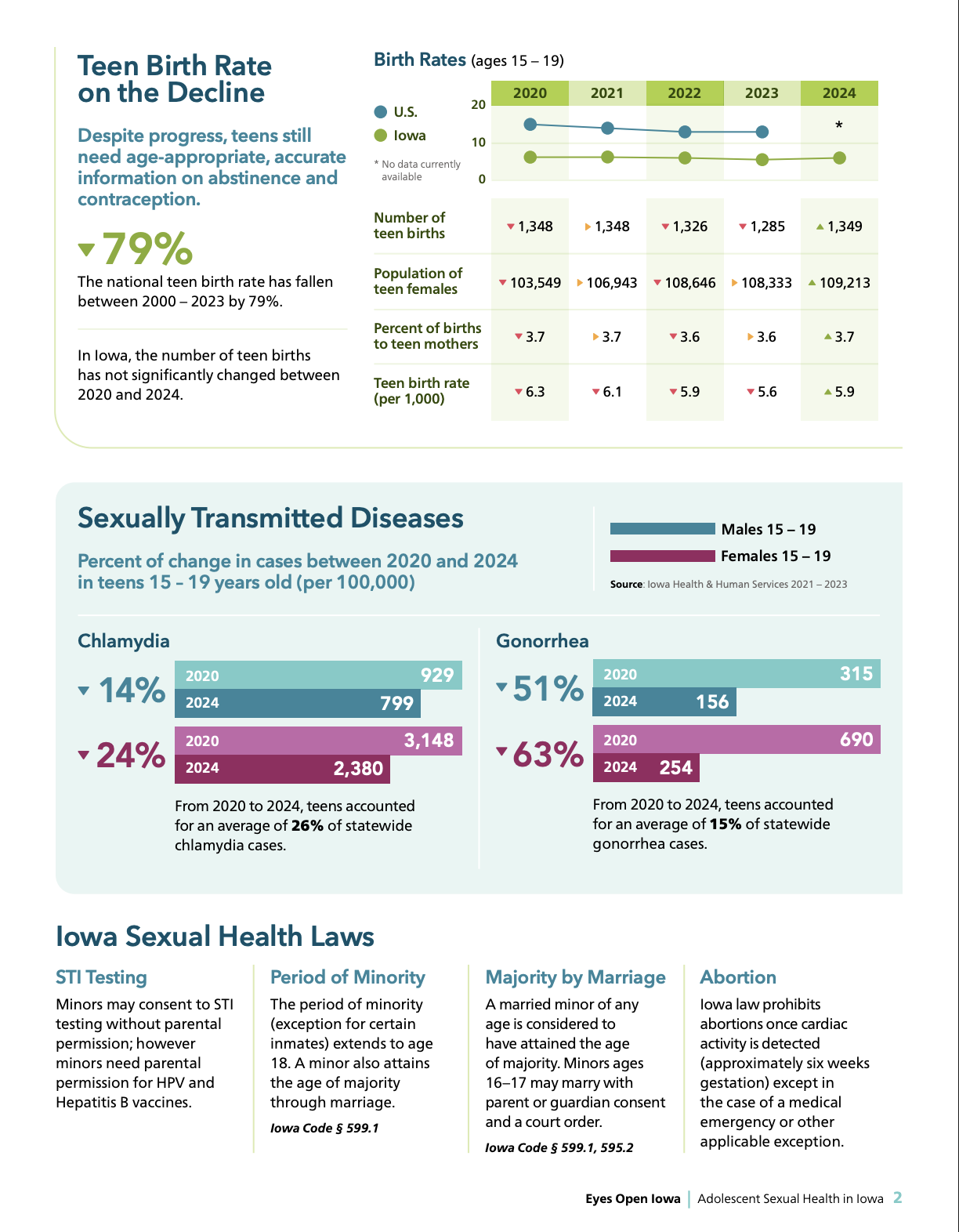
Those numbers come from our newly updated Adolescent Sexual Health in Iowa fact sheet. They show how much young people are navigating, often without the information or support they need. 

The fact sheet also shows what’s possible. 89% of Iowa students graduate high school. Iowa law requires schools to teach age-appropriate, research-based human growth and development, including interpersonal relationships and preventing sexually transmitted disease. When young people have accurate information and trusted adults to turn to, they make healthier, more informed decisions. 

Inside, you’ll also find the latest on teen births, STDs, dating violence and Iowa’s sexual health laws, all in one place. 

Print it, share it with a teacher or parent, or bring it to your next staff meeting. 
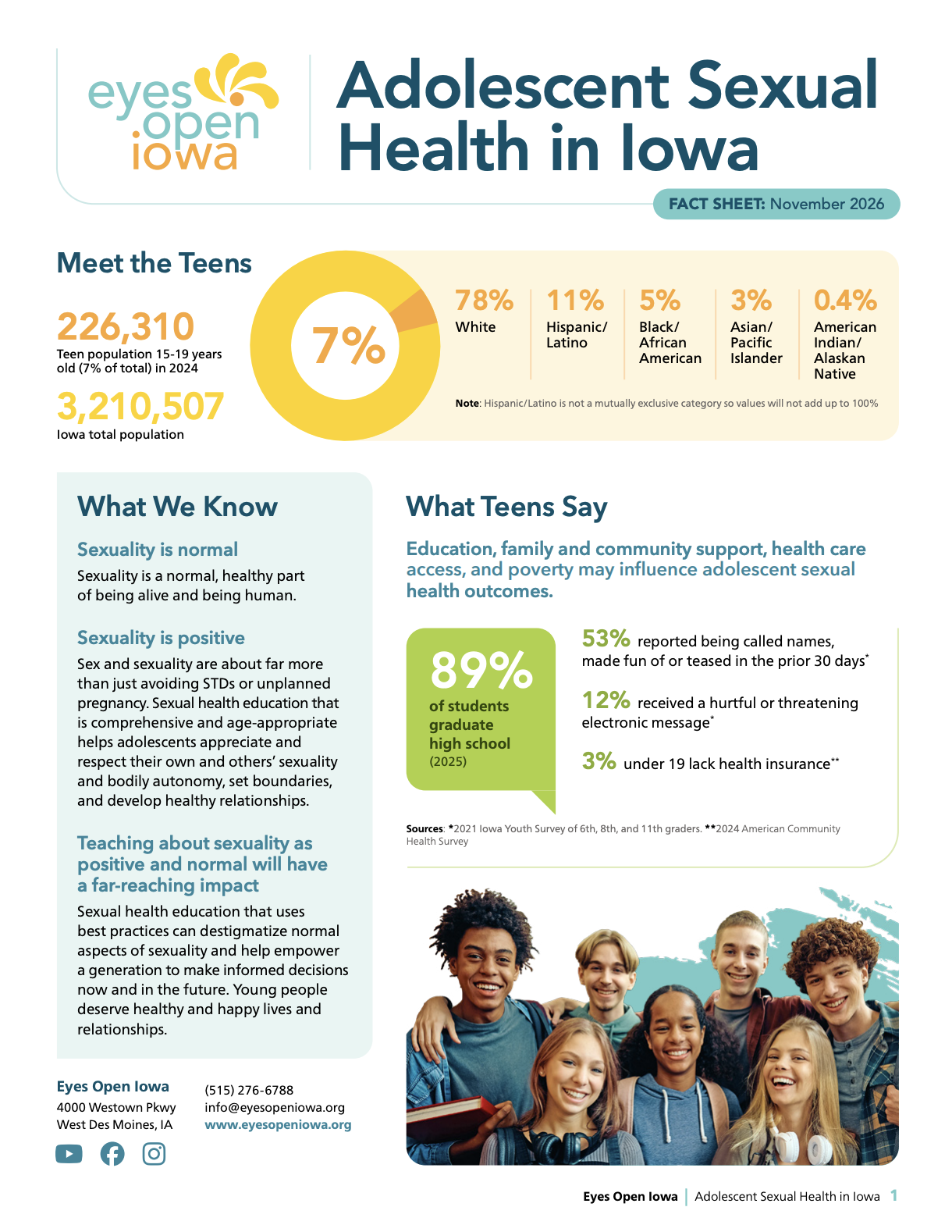
Click here to download the 2026 fact sheet

Good News Worth Celebrating: Teens Are Making Healthier Choices 

Good News worth Celebrating: Teens Are Making Healthier Choices 

With so many tough headlines about young people, here’s some good news. 

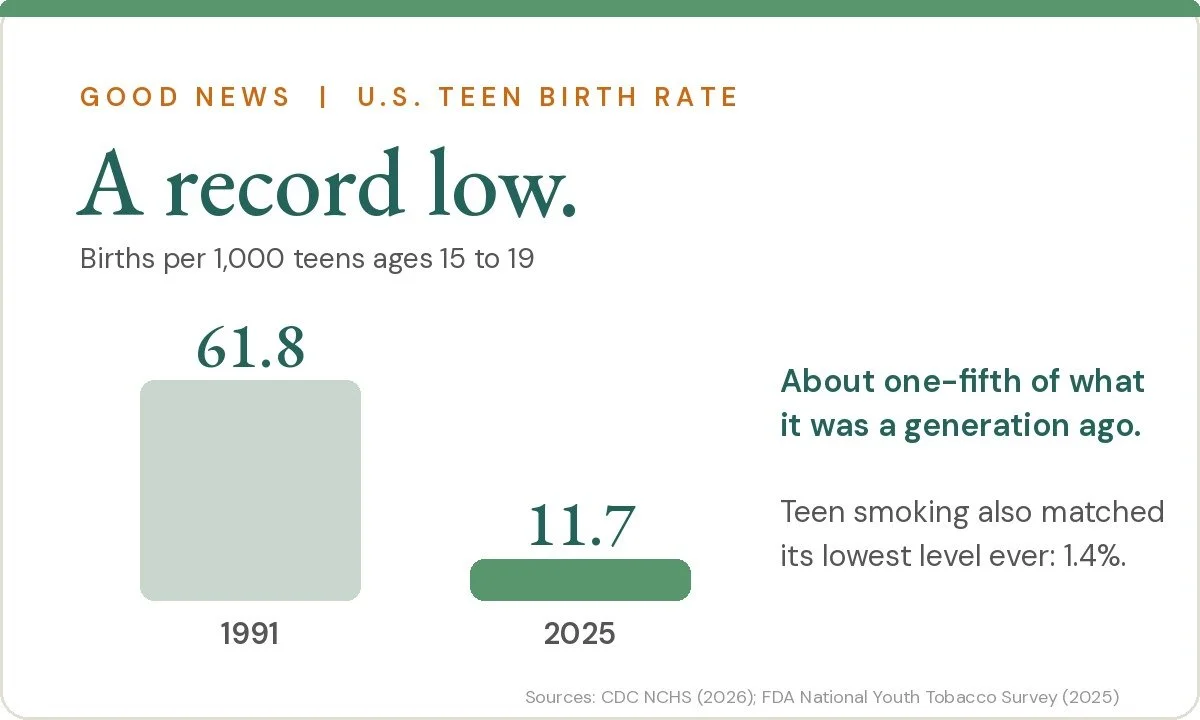
The U.S. teen birth rate just hit a record low. In 2025 there were 11.7 births per 1,000 teens ages 15 to 19, a 7 percent drop from the year before.

That’s down from a peak of 61.8 in 1991, which means the rate is about one-fifth of what it was a generation ago. The CDC points to two main reasons: more teens are waiting to have sex, and more sexually active teens are using birth control. 

Teens are also turning away from cigarettes. According to the 2025 National Youth Tobacco Survey, just 1.4 percent of middle and high school students currently smoke, matching the lowest level ever recorded. In 1997, more than a third of high school students did. 

Neither change happened by accident. They came from decades of honest information, accessible health care, and parents, educators and communities willing to talk openly with young people about their health. When teens get accurate information and caring adults in their corner, they make thoughtful choices for themselves. 

That’s the work we’re proud to be part of. 

Sources: CDC National Center for Health Statistics, Births: Provisional Data for 2025, via U.S. News & World Report, April 9, 2026; U.S. Food and Drug Administration, 2025 National Youth Tobacco Survey (2026); CDC Youth Risk Behavior Survey, 1997.