
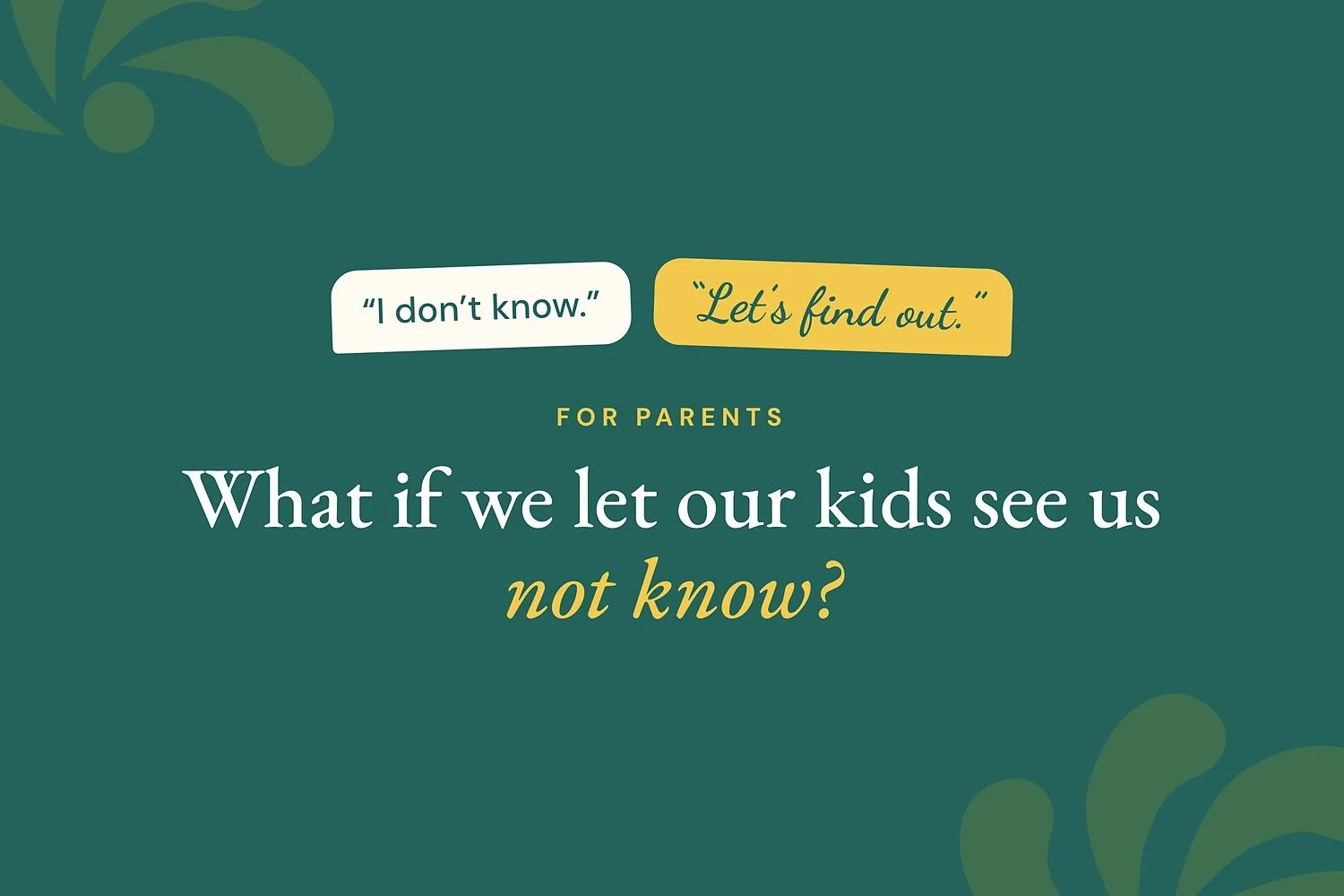
What If We Let Our Kids See Us Not Know?
I have worked in adolescent sexual health for a very long time.
This means that when it comes to talking to my own children about sex and relationships, I am always calm, confident, perfectly informed, and never awkward.
Hahahahahaha.
No.
Like every other parent, I have had questions from my children that caused some part of my brain to yell:
WE WERE NOT PREPARED FOR THIS QUESTION TODAY.
Sometimes I know the answer but have no idea how much information my child is actually requesting.
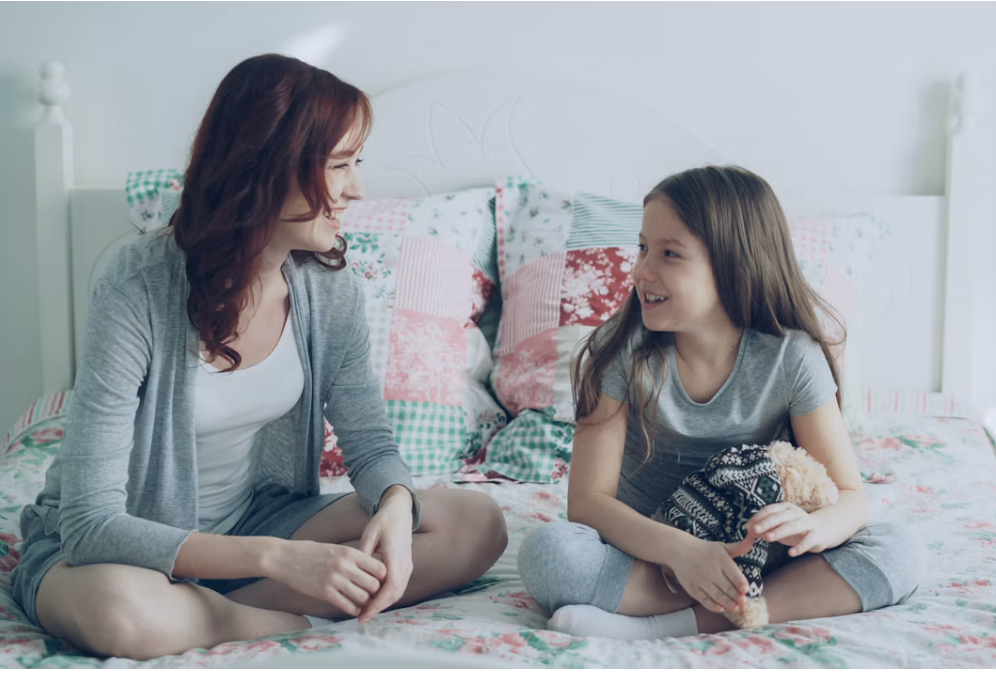
Sometimes I start answering and realize I have gone approximately six exits past the information they wanted.
And sometimes? I genuinely don't know. I think parents can feel enormous pressure around this. Especially when it comes to sexual health.
We think we're supposed to know when puberty starts and exactly how every form of birth control works and what every new term means and what kids are doing online and how to answer every possible question about gender and sexual orientation and relationships.
This can lead to a strange outcome: Because we're afraid of giving the wrong answer, we avoid the conversation altogether.
But what if one of the most useful things we can say to our children is: “I don't know.”
Followed by: “Let's find out.”
Think about what this teaches.
First, it teaches children that sexual health is a legitimate area of knowledge.
There are facts.
There are credible sources.
There are professionals who know things we don't know.
We can ask questions and learn.

In other words, sex doesn't have to live in some mysterious category where everyone is supposed to magically know things, but nobody is allowed to talk about how they learned them.
Second, saying, “I don't know” gives our children permission not to know either.
This is important.
Young people live in a culture where it can seem as though everyone else already knows everything about sex and relationships.
Their friends know.
TikTok knows.
The internet DEFINITELY knows.
And nobody wants to be the person who raises their hand and says:
“Wait. What does that mean?”
But not knowing is normal.
Adults don't know everything about sex either.
We don't know everything about our bodies.
We don't know everything about relationships.
We don't always know why we feel the way we do.
Many of us are still learning about our bodies well into adulthood—during pregnancy, after childbirth, while navigating sexual health concerns, during perimenopause and menopause, and in a thousand other circumstances nobody thought to mention in seventh-grade health class.
So perhaps part of comprehensive sex education is modeling what learning looks like.
A child asks a question. We take a second. Maybe we say: “That's a good question. I'm actually not sure.”
Then we figure out where to look.
Maybe we find a reliable sexual health website. Maybe we ask a doctor. Maybe we say, “I know part of the answer, but I want to make sure I'm giving you accurate information.”
And sometimes we may even discover that the answer is complicated.
That's useful too.
Because someday, our children will be adults responsible for their own sexual health.
We won't be sitting beside them at every medical appointment.
We won't be there when they have a question about contraception or a new relationship or something happening in their body that they don't understand.
What we can give them now is something better than an encyclopedic parent. We can teach them:
Questions are okay.
Not knowing is okay.
Your body is worth learning about.
You deserve accurate information.
You can keep asking until you understand. And maybe most importantly: There is no shame in needing help figuring something out.
Which means that perhaps the next time one of our children catches us completely unprepared with a question about sex, bodies, or relationships, we don't have to panic.
We can take a breath and say: “Huh. I don't know.”
And then we can learn together.
That sounds like pretty good sex education to me.
Gail Cowan, MSW, is EOI’s Director of Development. A former therapist, she also runs her own coaching business. Find her at gail@gailcowan.com or gail@eyesopeniowa.org.